SDRD is partnering with the University of Nevada, Reno to prepare for Scorpius operations and secure technical capabilities needed for future missions
Maintaining the safety, security, reliability, and effectiveness of our nuclear deterrent is the premier national security mission of the National Nuclear Security Administration (NNSA). For more than 30 years, the labs and NNSA have relied on a variety of methods, including radiography, to make critical observations that support certification of our stockpile.
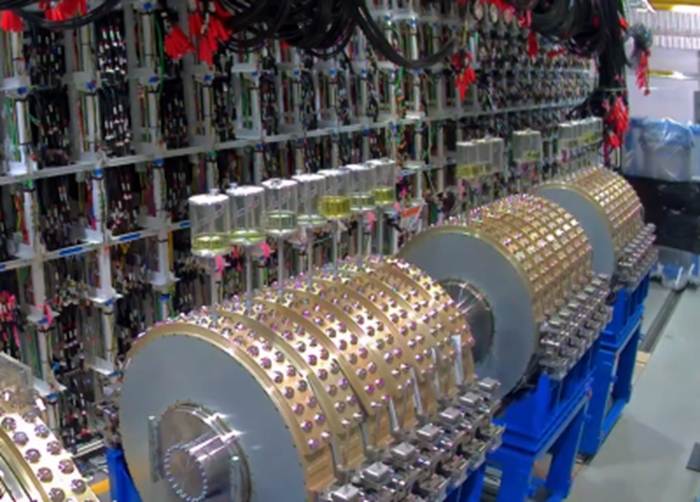
Working with Sandia, Los Alamos, and Lawrence Livermore, the Enhanced Capabilities for Subcritical Experiments (ECSE) portfolio is developing new capabilities to support this mission, most notably the Advanced Sources and Detectors (ASD) team’s Scorpius Radiography System, a multi-pulse radiographic system designed to capture late-time dynamics during subcritical experiments.
To prepare for future Scorpius operations and strengthen the specialized technical capabilities needed for current and future NNSA missions, the NNSS has partnered with the University of Nevada, Reno (UNR) in an enhanced collaboration effort through the Site-Directed Research and Development (SDRD) program. The effort is designed to develop critical skills within the existing NNSS workforce, create hands-on, mission-relevant research opportunities for students and faculty, and establish a long-term pipeline of scientists and engineers familiar with the NNSA mission.
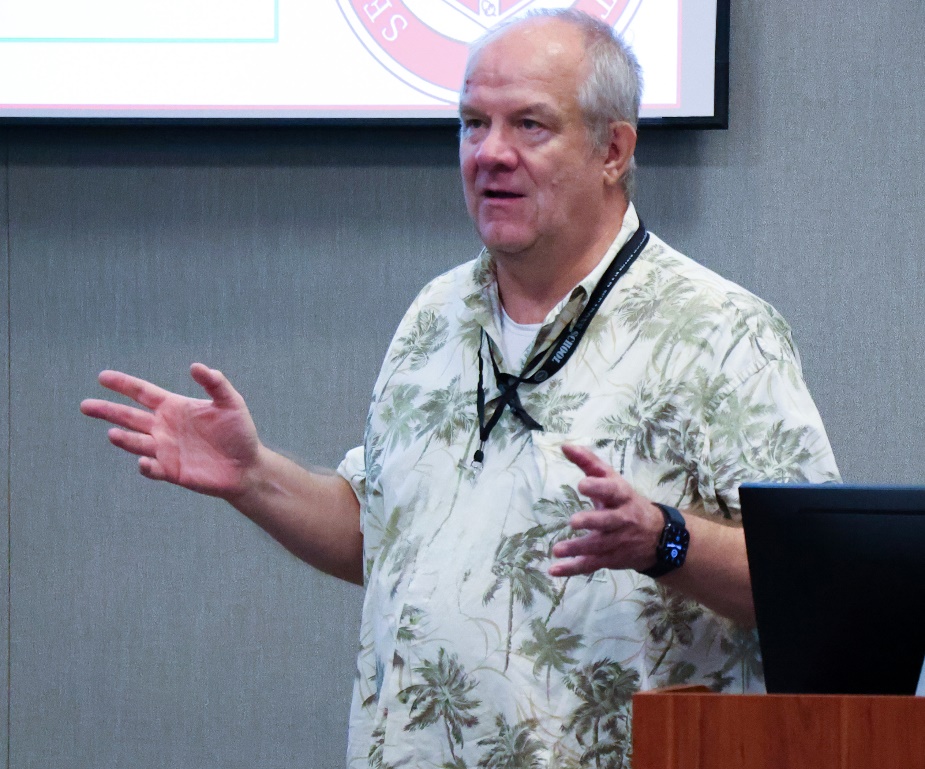
According to Dr. Piotr Wiewior, manager of ECSE’s Accelerator Physics and Pulsed Power team and principal investigator of the SDRD enhanced collaboration strategic initiative, “We need to develop collaborations with institutions we trust and that have good, accredited programs so that we can attract students to fill our hiring needs.” The solution: university partnerships.
The NNSS collaborates with many universities and industry partners to fulfill the NNSA’s national security mission. UNR is a natural choice for a mutually beneficial collaboration due to its experimental facilities, proximity to the NNSS, and a track record of successful plasma physics and high energy density physics research collaborations that produced a significant number of publications and led to many highly qualified graduates joining the NNSS. “Through this effort, the NNSS will have a pipeline for new employees, and UNR can develop a focus on national security research and development,” Wiewior said.
To adequately prepare for the fully operational Scorpius accelerator, the NNSS is focused on recruiting UNR master’s and doctoral students from across science, technology, engineering, and math (STEM) programs. Wiewior noted, “We have a particular emphasis on plasma physics, laser physics, diagnostics, and accelerator physics, but we are also looking for students trained in materials science, Earth sciences, chemistry, materials engineering and other engineering disciplines.”
The collaboration extends beyond classroom education and workforce recruitment. NNSS and UNR researchers are developing hands-on R&D activities in areas such as accelerator and beam physics, pulsed-power research, advanced diagnostics, laser-based experiments, and computational modeling. These activities allow NNSS personnel, university faculty, and students to work together on technical challenges relevant to emerging national security capabilities while developing skills that will be important for future NNSA missions.
Ultimately, Piotr and his team want to develop an accelerator physics program with UNR to give students specialized knowledge to operate machines like Scorpius after they graduate. “Accelerator physics is a hard program to find at any school,” said Wiewior. “We want to increase the number of graduates who have gone through those classes.”
To help achieve that goal, the next phase of the strategic initiative program will assist UNR with building out an experimental facility to support the accelerator physics program. “The students and faculty at UNR will do research on the experiments, the hardware, and the accelerator, and the NNSS will help them build a small accelerator,” Wiewior explained. Thanks to these collaborative efforts, more students will be able to expand their ideas of the physics work available to them and are more likely to consider the NNSS as a place of employment following graduation.
Although the strategic initiative is still in its early stages, the collaborative work done so far has been exciting for both the NNSS and UNR. Wiewior said, “Everyone has great expectations for the future. We have plans to extend the collaboration for the next three to five years and beyond. The university–laboratory partnership model has been successful across the national security enterprise, and we are adapting that model to NNSS needs.”
As the collaborative work between the NNSS and UNR continues to grow, the talent pipeline will continue to strengthen and will one day make significant contributions to the national security mission using the Scorpius accelerator. With these long-term goals in mind, Wiewior added he recognizes the need to build a strong collaborative foundation based on trust and patience. “This effort is a marathon, not a sprint. It will take effort from both sides, but both sides are very interested in this work. I am very hopeful for the future.”