
Photonic Doppler Velocimetry (PDV) is a vital diagnostic in studies of the shock compression of condensed matter, high explosives, and other dynamic phenomenon, and is just one of the tools used by Nevada National Security Sites (NNSS) and national laboratory scientists to conduct research and collect data used to certify the safety and effectiveness of the U.S. nuclear stockpile.
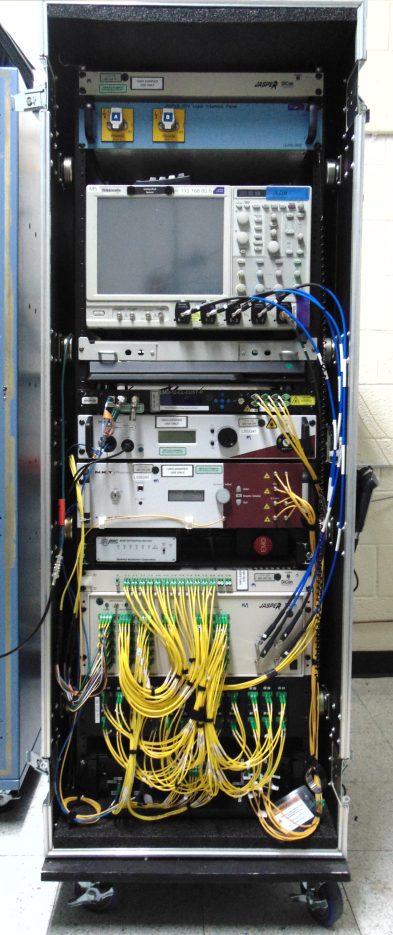
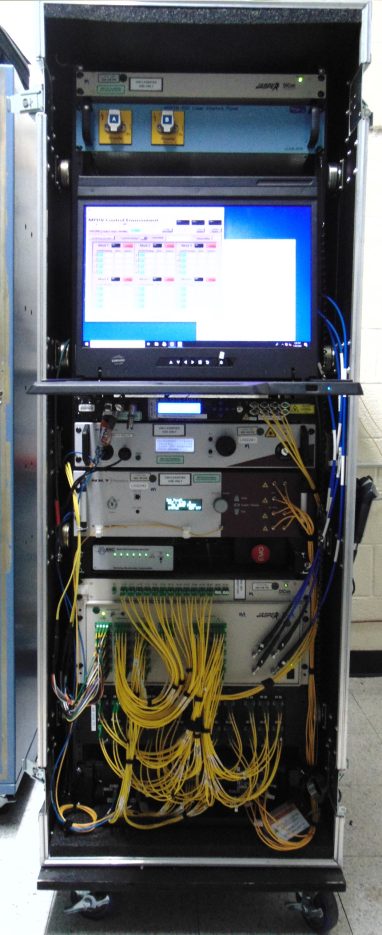
JASPER, the Joint Actinide Shock Physics Experimental Research facility at the NNSS, has used PDV for the last 20 years to gather precise plutonium performance data. At its inception, JASPER utilized a 16-channel PDV system for data acquisition, which later evolved into a 20-channel system. That 20-channel system just got a substantial upgrade: A team of scientists from NNSS and Lawrence Livermore National Laboratory recently replaced it with a 24-channel Multi Photonic Doppler Velocimetry (mPDV-24) device.
“This transition to the mPDV-24 system represents a significant leap forward in our diagnostic capabilities,” said NNSS Experimental Operations Manager Tyrel Otteson. “By embracing this state-of-the-art technology, we’re not only achieving higher data quality and increased experimental flexibility, but also realizing substantial operational efficiencies through a reduced footprint and simplified operation. This upgrade positions us to conduct even more precise and complex measurements, pushing the boundaries of our research.”
The mPDV-24 brings several key improvements. Experimentally, JASPER now has an additional four channels of data recording capability, allowing the capture of surface velocity measurements of additional areas on the target and increasing the spatial resolution of those measurements. “This is crucial for experiments where shock front or deformation is not uniform,” notes Dr. Pat Ambrose, a collaborating researcher from Lawrence Livermore National Laboratory.
Next, the system now uses time-multiplexing, an innovative approach which allows one digitizer channel to handle six data channels, as opposed to the one-to-one digitizer-to-data channel setup of the retired 20-channel PDV system. This not only frees up valuable physical space in the JASPER facility, but it also reduces ongoing calibration and maintenance costs for digitizers and makes the system much easier to operate.
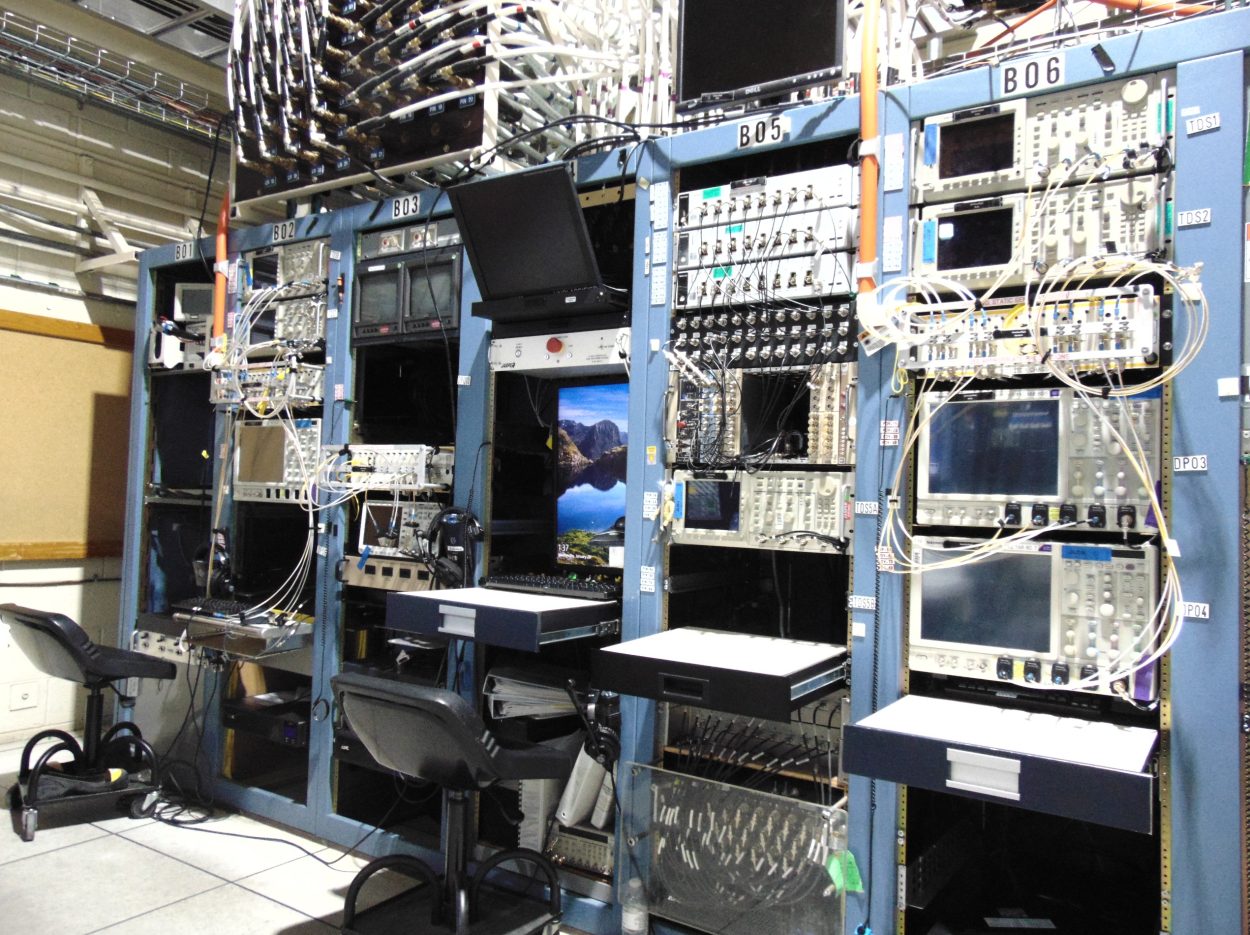
The mPDV-24 system also significantly improves the signal-to-noise ratio. This translates to increased measurement precision and resolution, ultimately leading to much higher data quality – a critical enhancement for data analyses. Finally, the mPDV-24 — while markedly more powerful than the 20-channel system — is also much more compact. Whereas the 20-channel system took four racks of space in the JASPER control room, the new mPDV-24 requires only one.