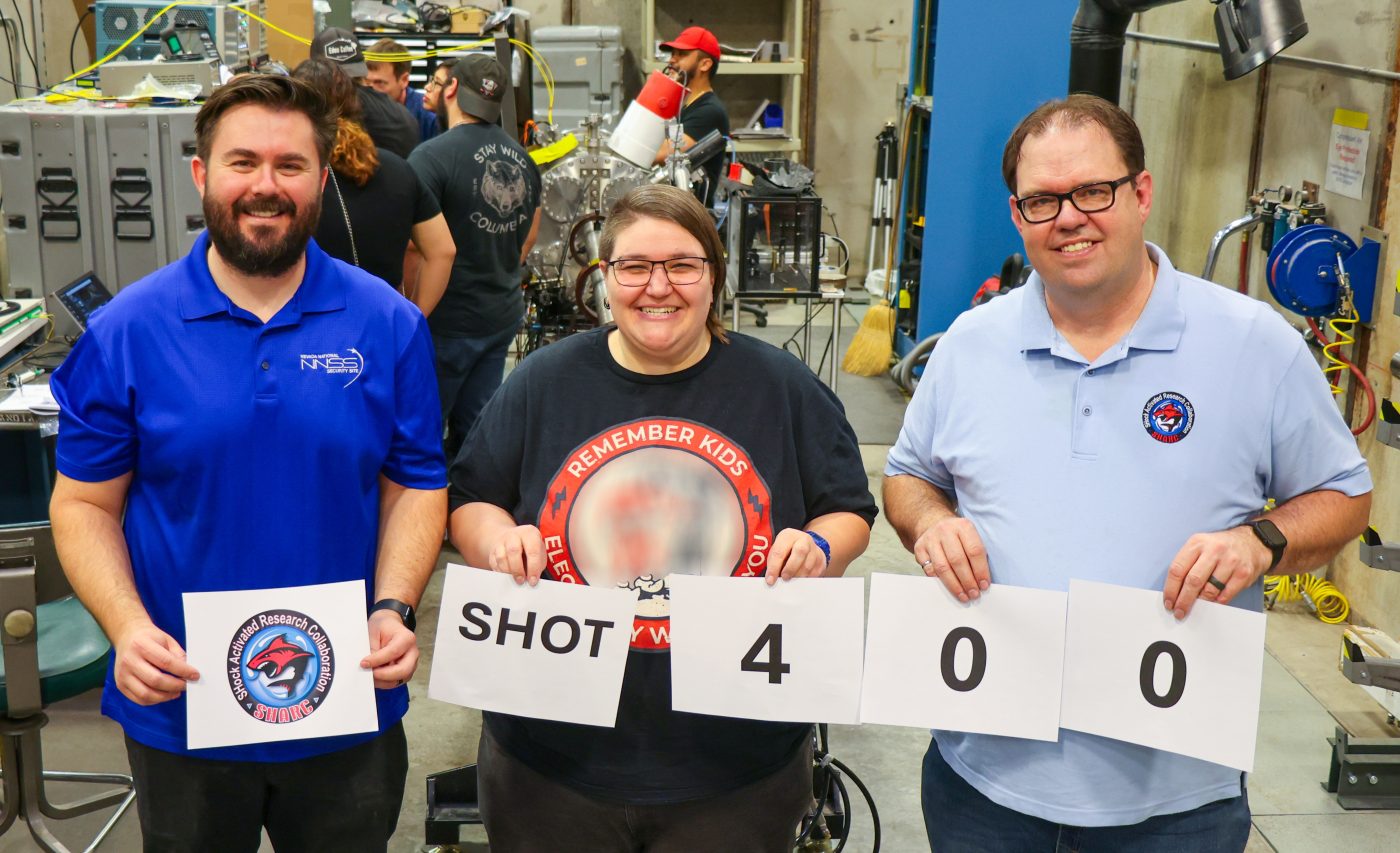
The Nevada National Security Sites (NNSS) is celebrating a significant achievement: the Shock-Activated Research Collaboration (ShARC) Launcher successfully conducted its 400th experiment on March 26, 2026.
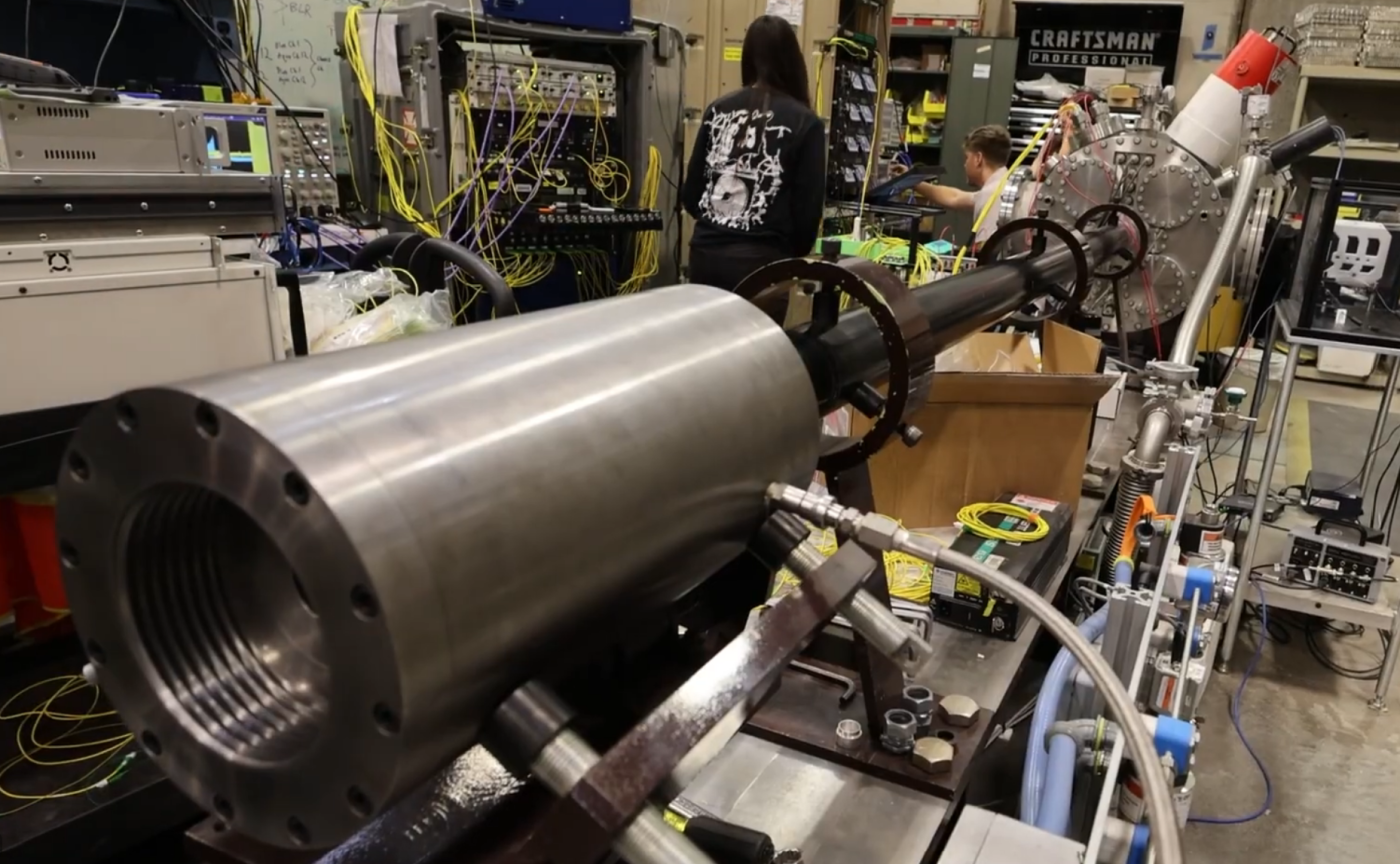
The NNSS’ experimental facilities, such as the Joint Actinide Shock Physics Experimental Research (JASPER) facility, Big Explosives Experimental Facility, and the Principal Underground Laboratory for Subcritical Experimentation conduct high-level experiments that directly contribute to national security objectives. The ShARC Launcher is a scaled-down and modular version of the JASPER two-stage gas gun that provides essential training and hands-on experience for high-level experiments.
Moreover, because it is situated at the NNSS North Las Vegas Facility, it is more accessible than the primary experimental testbeds located 90–100 miles northwest at the main Site. Researchers utilize this versatile platform for a variety of functions, including conducting physics experiments, testing diagnostic equipment, and providing invaluable skillset development and training opportunities for the technical workforce. It also serves as an essential tool for conducting supplemental “dry runs” for larger-scale experiments slated for the JASPER facility, ensuring readiness and optimizing outcomes.
The 400th experiment itself was a testament to the ShARC Launcher’s multifaceted utility. It was conducted as part of a campaign that simultaneously validated a new diagnostic, “Hydra 2.0,” and supported a Site-Directed Research and Development feasibility study which focuses on enhancing ejecta measurements.
The sustained operation and continuous advancements facilitated by the ShARC Launcher are pivotal to maintaining the NNSS’ cutting-edge capabilities and ensuring the ongoing development of its expert technical workforce. As Senior Engineer James Majdanac summarized the platform’s importance: “The ShARC launcher is a unique and highly adaptable platform, enabling the advancement of diagnostics and the development of skills in our workforce through dynamic operations. We’ve learned a lot from these 400 experiments, and we’re all looking forward to 400 more.”