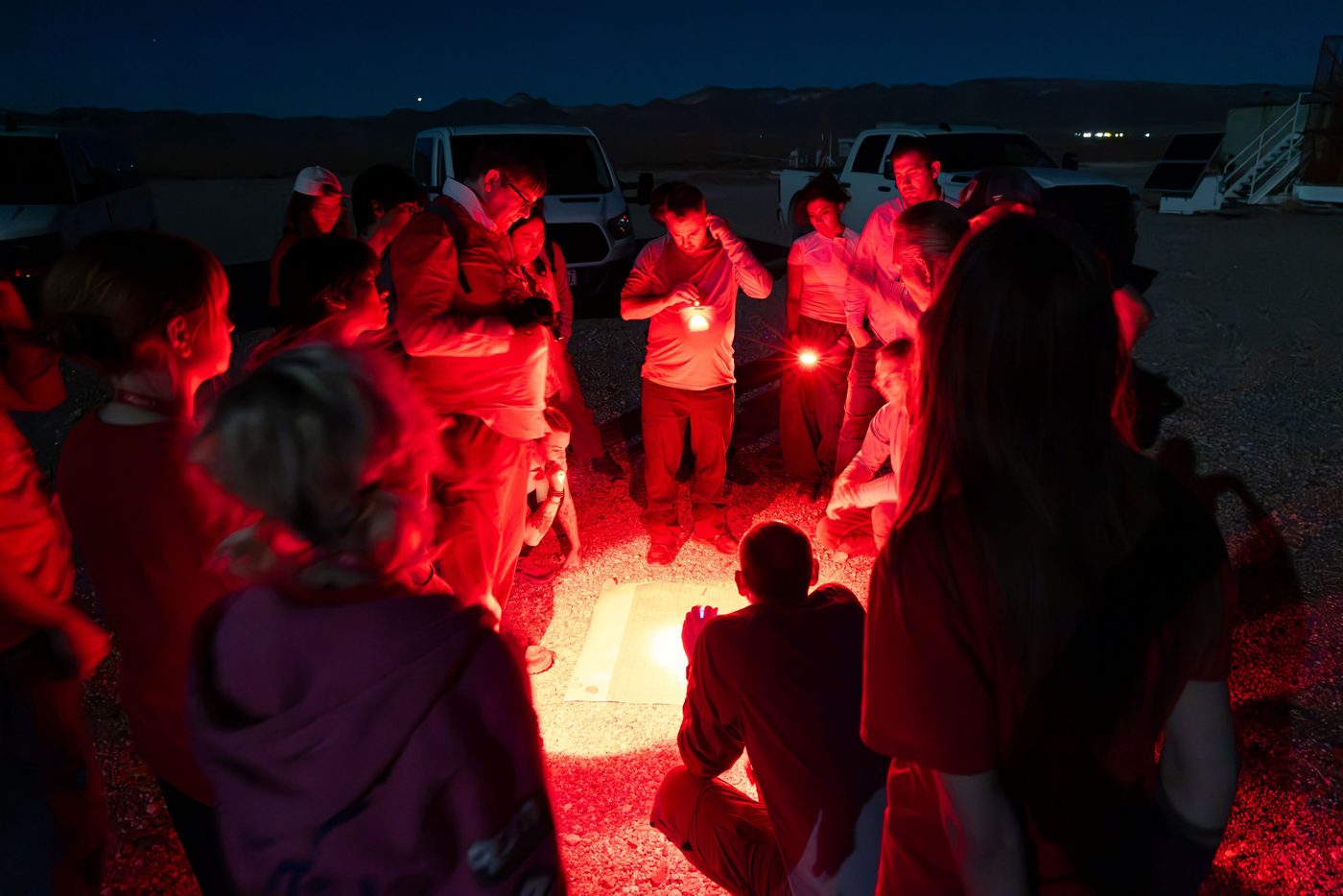
Before NASA astronauts take their historic steps on the lunar surface during the upcoming Artemis missions, they are honing their navigational, operational, and scientific skills in the rugged terrain of the Nevada desert.
Last month, the Nevada National Security Sites (NNSS) hosted a group of NASA personnel and University of Nevada, Las Vegas (UNLV) students at its Nevada Space Proving Grounds (NSPG) for an intensive run of the NNSS-developed Lunar Surface Operations Course (LSOC). The hands-on training provided participants with direct exposure to full-scale lunar analogue operations, bridging the gap between academic space studies and real-world aerospace careers.
Rebooting a historic NASA legacy
The LSOC curriculum is built on a rich historical foundation. During the Apollo program of the 1960s and 1970s, NASA astronauts traveled to the Nevada Test Site—now known as the NNSS—to train in the vast crater fields created by historic underground testing. Every astronaut who walked on the moon first trained in these Nevada craters.
“The LSOC and other NSPG training is really a reboot of the NASA-affiliated work that was done out here at the test site in the 1960s and ’70s,” said NNSS Principal Scientist Nick Downs. “All of the Apollo astronauts trained out here. All of the astronauts who set foot on the moon first came here and trained in these same craters. It’s hard to find craters that are 300, 400 meters in diameter, let alone hundreds of craters of that size clustered this closely together, anywhere on Earth. It just doesn’t exist, and that makes the NNSS an exceptional place to do this kind of work. It’s truly the only place you can train at a kilometer scale.”
As NASA prepares to return humans to the moon for the first time in more than half a century, the NNSS’s unique terrain offers an irreplaceable environment for testing equipment and operational concepts.
“Going back to the moon, this is the first time since Apollo days where crew will actually be walking on a terrestrial body for good distances. We haven’t done this in a very long time,” explained Quinn Dunn of NASA’s New Moon Base Program. “Having the ability to have hands-on access to the type of terrain reminiscent of that we’ll see on the moon… you can only do so much in a chamber. This gives us the vastness of what we’re going to see on the moon.”
Hands-on science at 1:1 scale
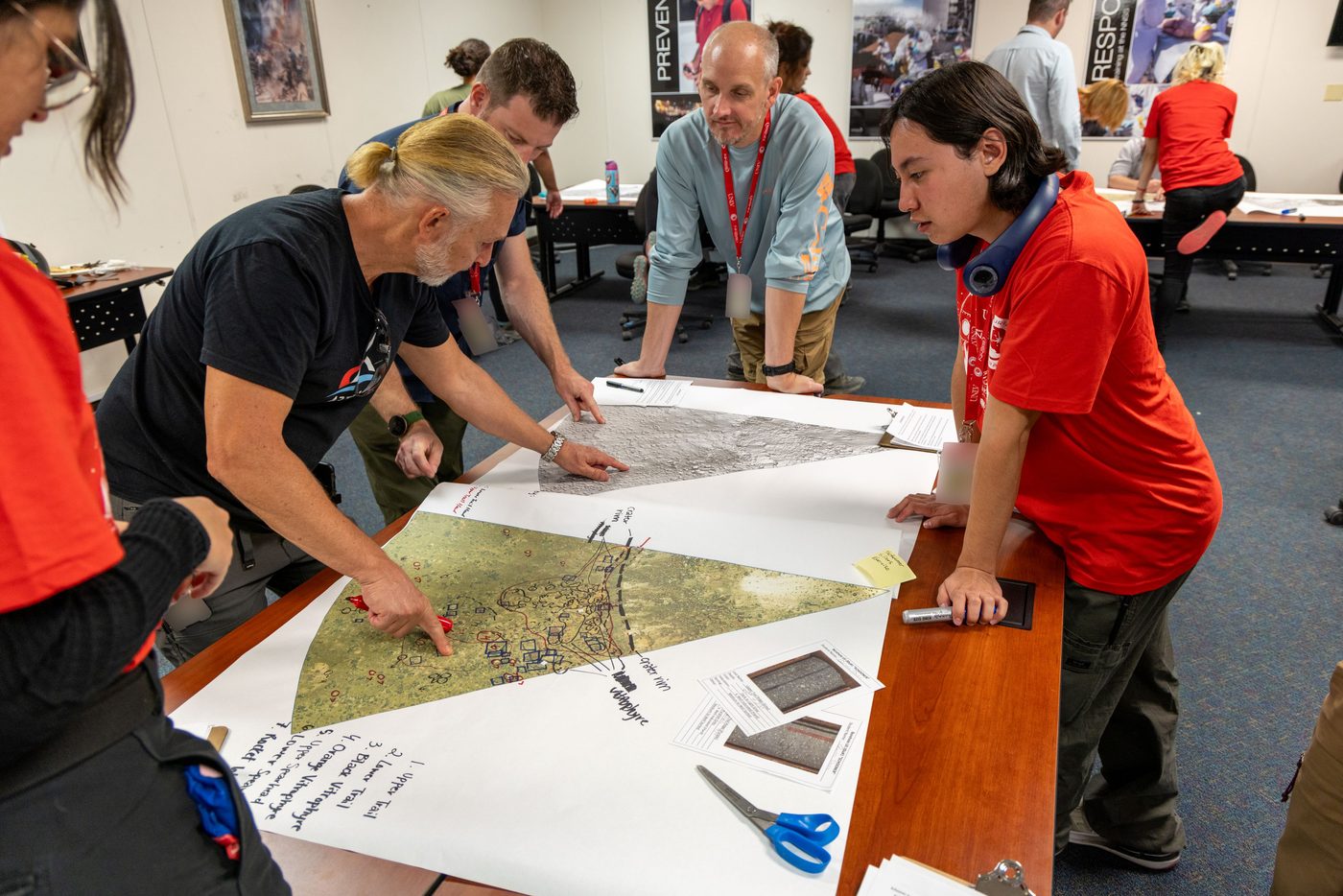
Developed over two years by Downs and fellow Principal Scientist Bryan Eleogram, the LSOC features an approximate 80/20 split between field operations and classroom instruction. The curriculum is designed to teach space industry participants how to execute rigorous science under demanding physical conditions.
During the course, UNLV students engaged in a variety of simulated lunar surface activities, including:
- Simulated Extravehicular Activities: Students conducted simulated moonwalks, practicing movement, communication, and field geology techniques across rocky, cratered slopes.
- Traversal route planning: Participants plotted traversal courses on the lunar surface using high-resolution remote sensing datasets and digital elevation models.
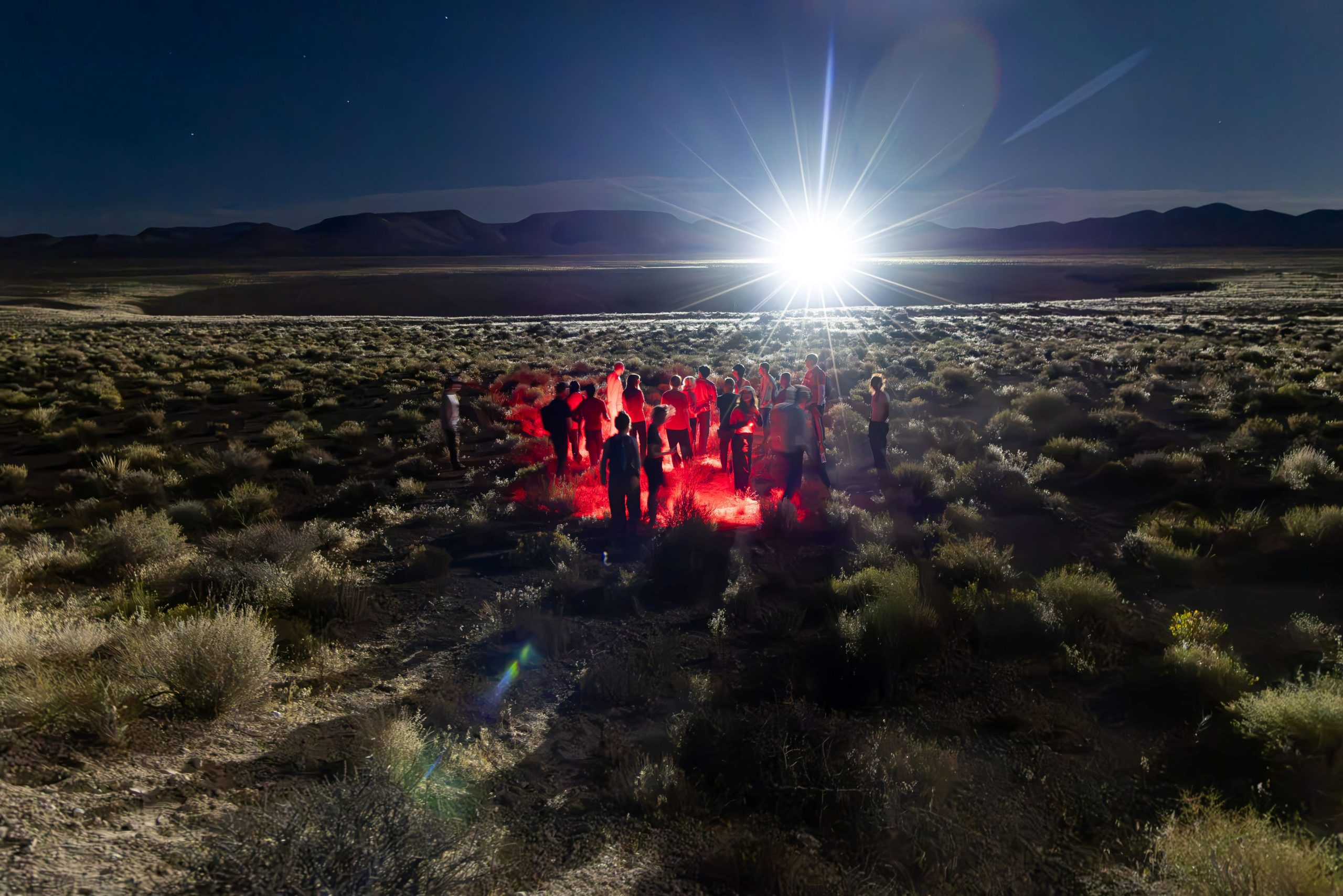
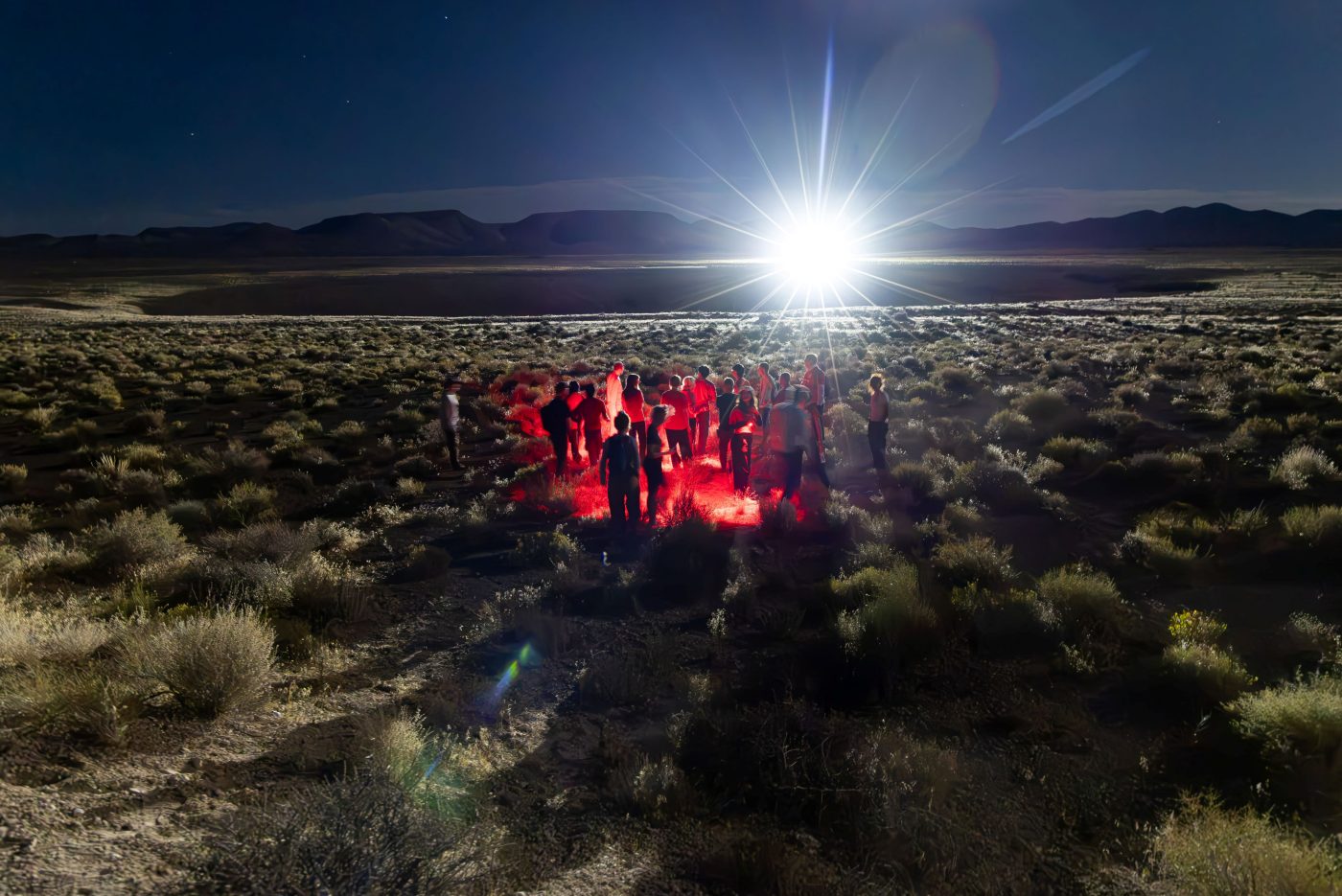
- Extreme lighting navigation: Students experienced the unique visual challenge of navigating under a low-horizon sun using the “Lunar Dominator 800,000″—a massive, high-output light source that mimics the intense, blinding glare astronauts encounter on the moon.
“The craters at the Site provide a great analogue for lunar surface training for all sorts of space professionals, whether from industry, government or academia,” noted NNSS Geoscientist Tara Bartlett.
Inspiring Nevada’s aerospace future
In addition to serving NASA program objectives, the LSOC offers Nevada students exposure to a unique, exclusive opportunity in their aerospace career trajectory.
“One thing we noticed is that infrastructure for Nevada students doesn’t really exist in the aerospace area, and this really helps bridge that gap,” said UNLV student Kylee Brahman. “The impacts of the research that’s been going on here, and continues to go on here, is so monumental. It makes me excited about the future of aerospace and space flight, as well as the Artemis generation as a whole. I would encourage people to get involved.”
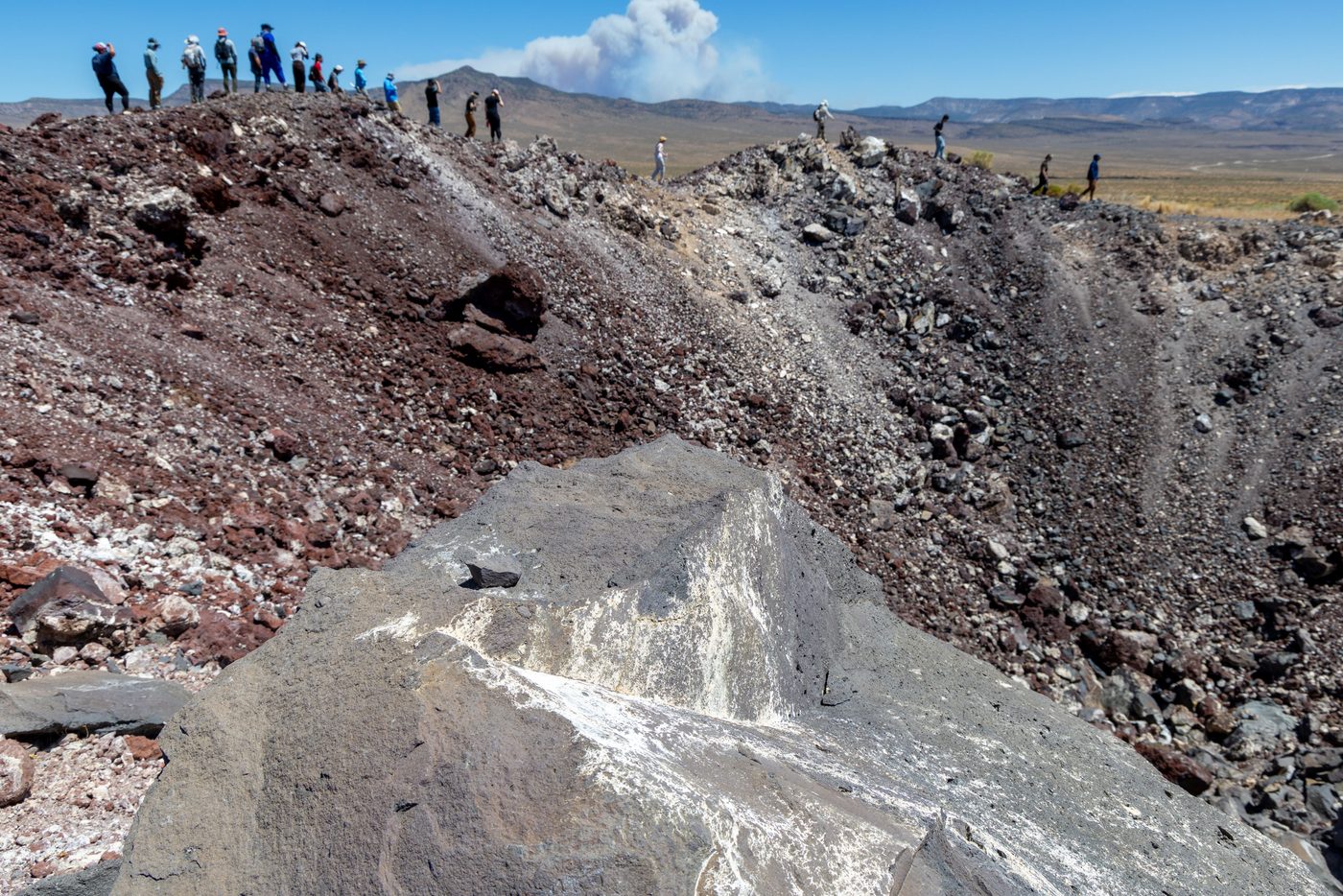
The collaborative relationship between the NNSS and UNLV allows scientists to refine course modules while providing students with unforgettable career insights.
“UNLV has been a great partner to help us grow, develop, and fine-tune this course,” Bartlett said. “This is the second time they’ve been out here, and their feedback has been invaluable in making the course better.”
For the attending students, the three-day immersion offered both educational value and career inspiration.
“This is honestly the best three days of my summer,” UNLV student David Gonzalez shared. “I saw great sights and learned a lot about Nevada and the test site history. It was amazing.”
“I could have a career here, with other people who are like me, who look like me, who get to do this field work every day,” added UNLV student Maya Lopez. “It’s like, oh my god, that could be me someday. We’re all just a bunch of little space nerds and this course has warmed our little space hearts.”
For the NNSS scientific team, guiding university cohorts through the program is a rewarding extension of their primary mission.
“We walk them through all the training that the Apollo crew took, and all the training that the Artemis team took,” Downs said. “Being able to have a small role in training the Artemis crew and training the next generation of university students who may one day work for NASA and who may be astronauts in 10 or 20 years is inspirational and just… fun.”