The Nevada National Security Sites (NNSS) recently completed another successful series of joint rocket launch experiments, marking three years of close collaboration with the Kansas City National Security Campus (KCNSC) and the Oklahoma Aerospace Institute for Research and Education (OAIRE) at Oklahoma State University.
These experiments are part of an ongoing mission to bridge the gap between laboratory concepts and active flight environments. By integrating academic research with national security capabilities, the joint team provides a rapid, low-cost platform to test proof-of-concept payloads under realistic flight conditions.
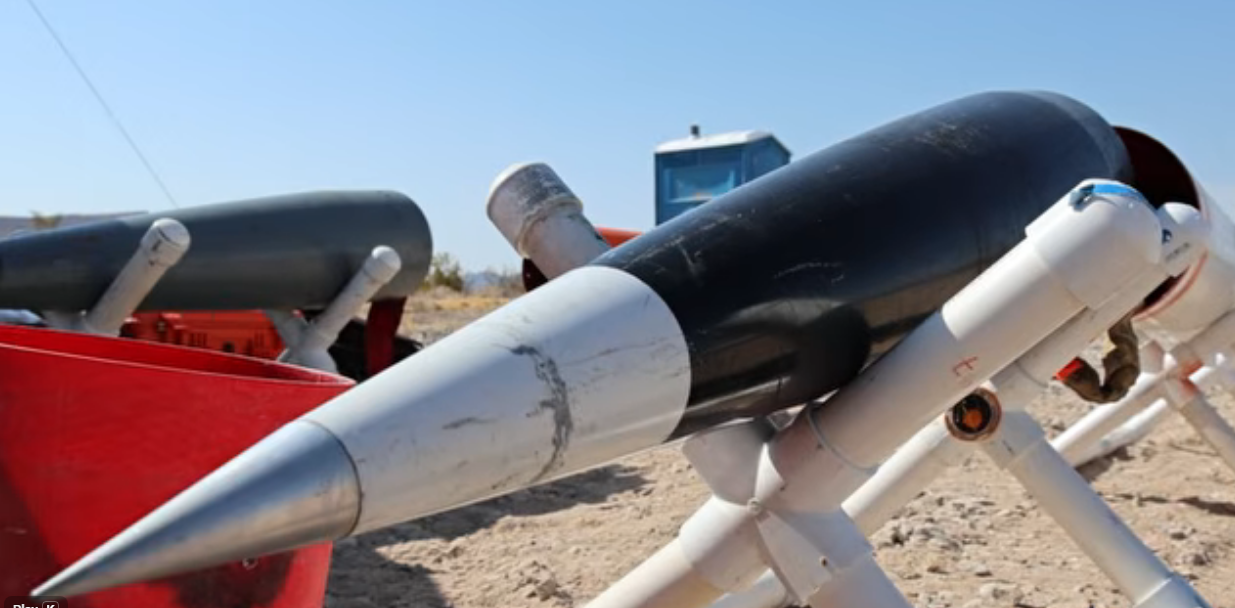
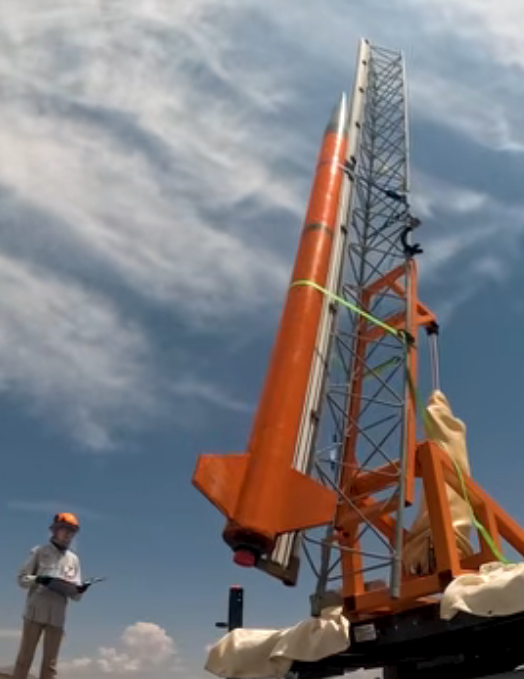
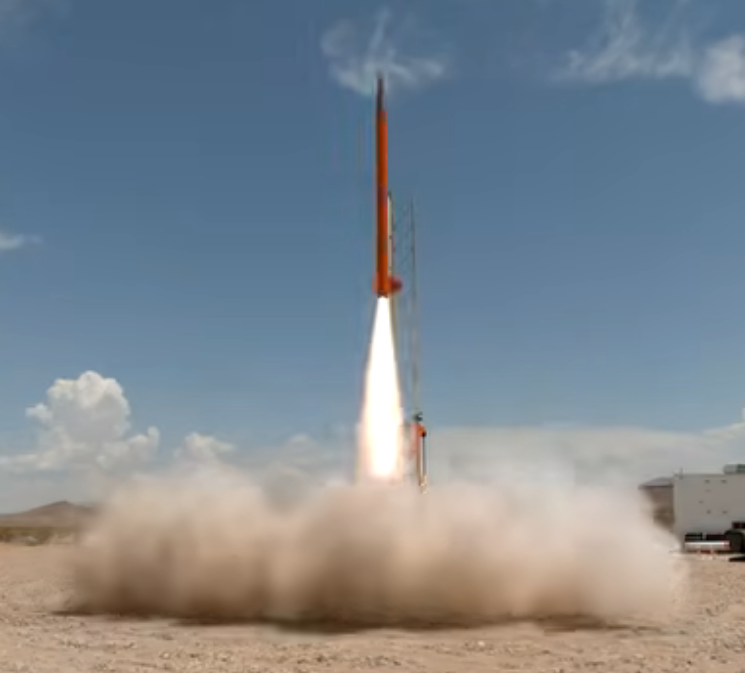
During the week-long campaign, the team successfully launched two 8-inch diameter fiberglass rockets. Each vehicle, weighing roughly 130 pounds, ascended to altitudes between 8,000 and 9,000 feet, reaching speeds just below Mach 1. These launches allowed researchers to evaluate diagnostic equipment, evaluate motor performance, and gather critical data on parachute deployment and drift.
A premier testing ground
Testing flight vehicles requires specialized conditions that are difficult to replicate in standard laboratories. The NNSS’ vast terrain offers a premier testing environment, featuring deconflicted, restricted airspace and secure radio frequencies. This unique infrastructure allows national security partners and university researchers to execute high-fidelity experiments safely and confidentially.
“This program gives us a cheaper opportunity for higher fidelity, being able to test more than just in an environmental lab,” explained a representative from the KCNSC payload testing team. “This actually provides the opportunity for initial proof-of-concept testing to transition a concept from the development area into an actual flight test.”
Fostering the next generation of researchers
Beyond the technological data collected, the partnership provides student researchers from OAIRE with invaluable field experience at a premier national security facility. Operating in a remote desert environment introduces real-world variables—such as temperature, wind, and rugged terrain recovery—that cannot be simulated in an Oklahoma classroom.
The hands-on nature of the project has generated immense pride among the participants. “You do all of the prep work in the lab so that you can come out here and fly,” noted one student. “It’s pretty amazing when we actually see it go up and see the chute deploy. Everybody gets really excited.”
The successful recovery and analysis of these payloads reinforce the NNSS’ role as an essential facilitator of national-level experimentation. By hosting these rapid-response tests, the NNSS, KCNSC and OAIRE are accelerating the pace of modern engineering to support the nation’s security objectives.