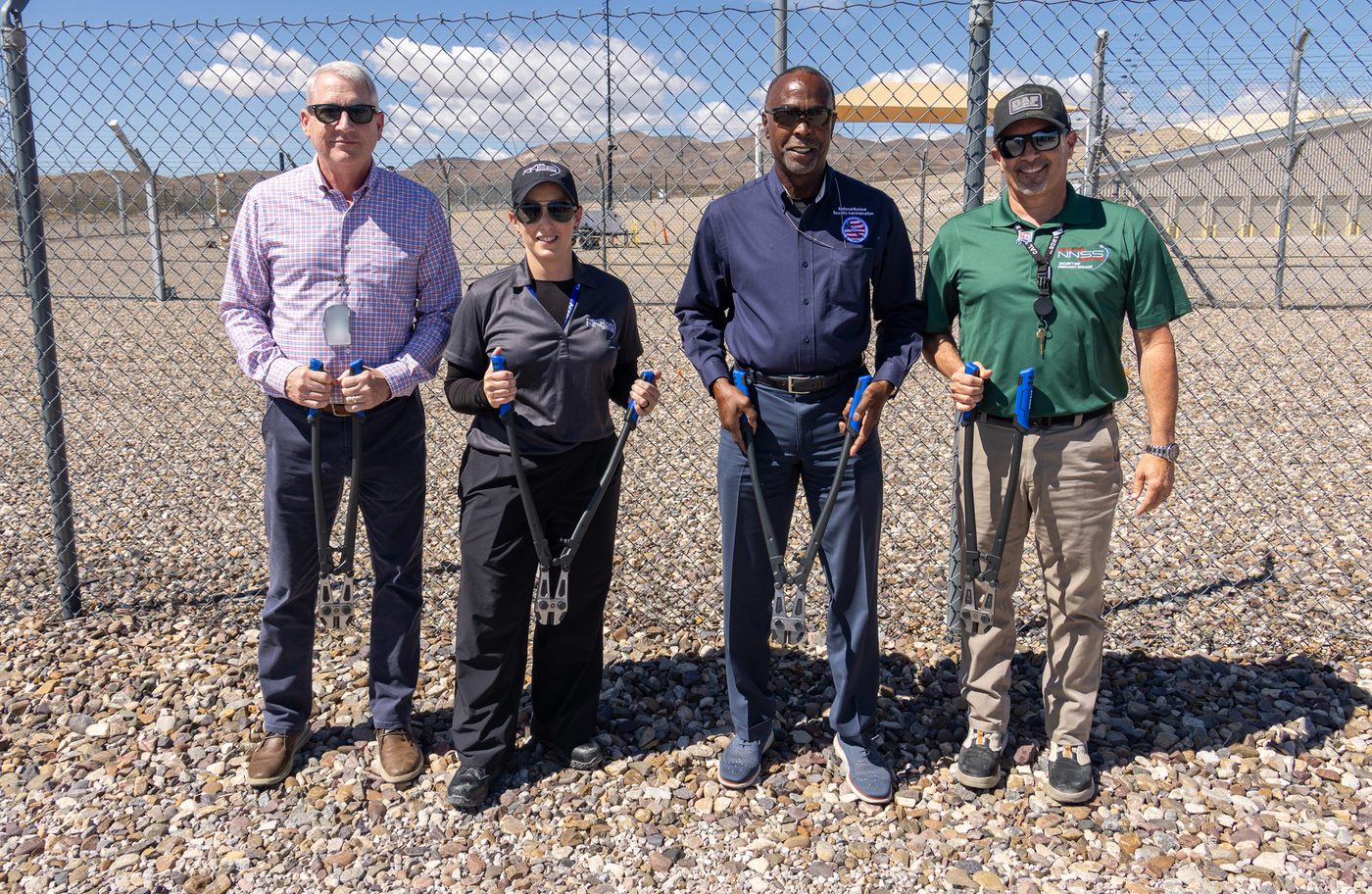
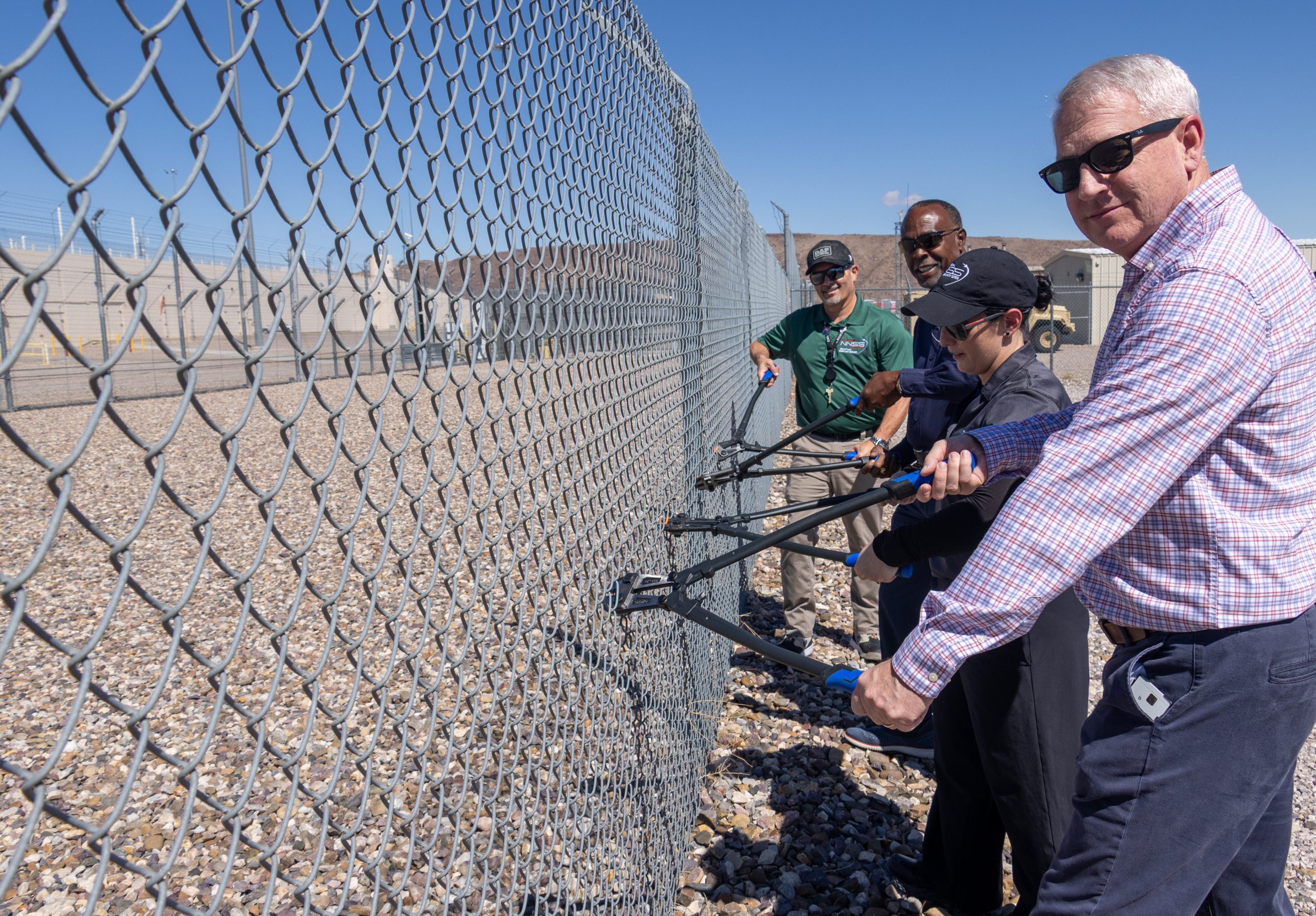
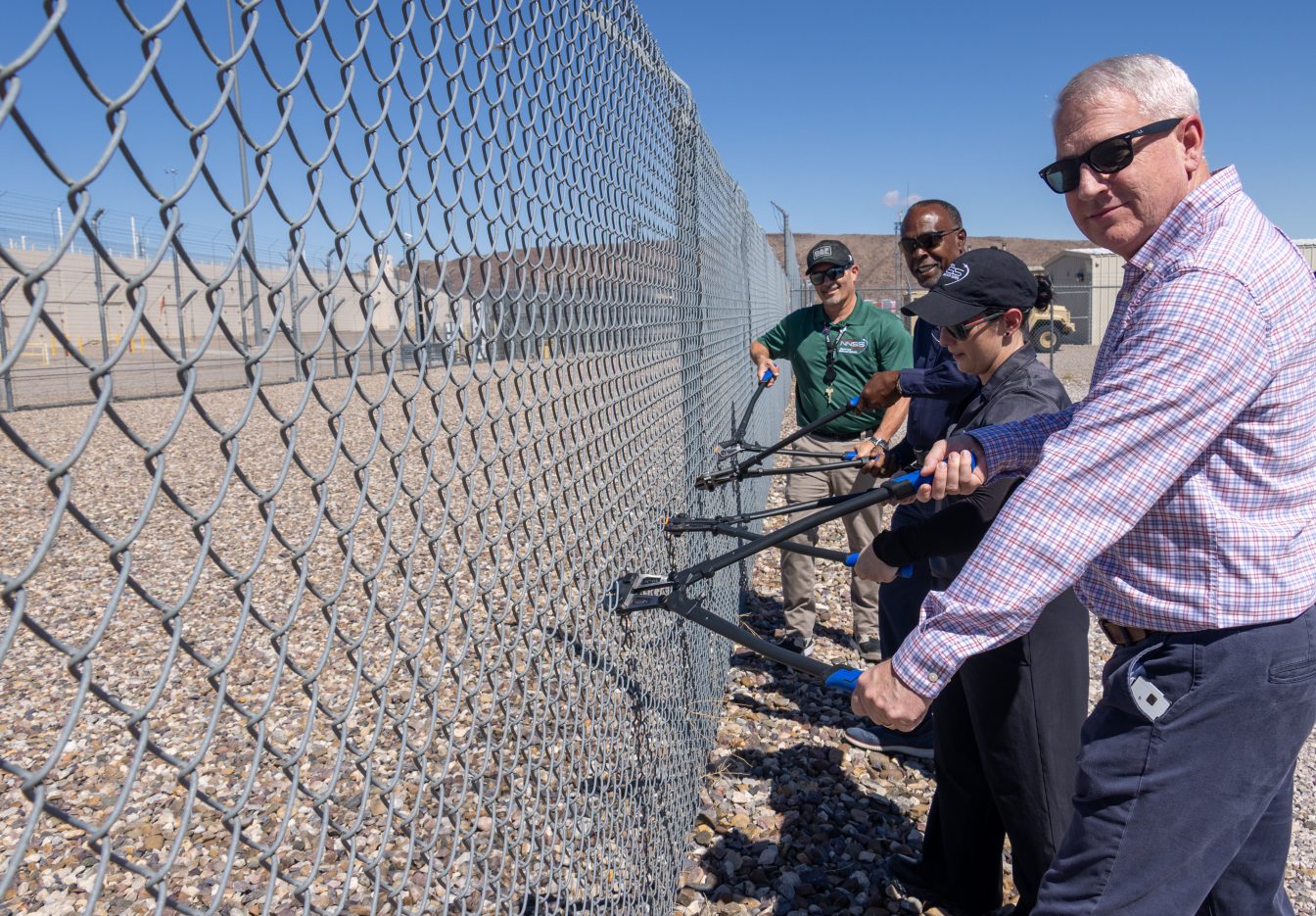
A new security effort at the Nevada National Security Sites’ (NNSS) Device Assembly Facility (DAF) will set the bar for security modernization across the Nuclear Security Enterprise.
Currently, two physical fences run in parallel to mark the DAF’s perimeter. While the existing system has effectively supported the facility’s security needs, NNSA Associate Administrator and Chief for the Office of Defense Nuclear Security Lewis “Lew” E. Monroe III sees an opportunity to build on that strong foundation by modernizing the perimeter infrastructure, improving efficiency and reducing long-term costs.
As an innovative solution, the High-Security Area Detection and Early Warning Strategy (HADES) will remove one layer of fencing and replace it with state-of-the-art technology—ensuring greater security safeguards and capabilities.
“What we’re about to do at the DAF is groundbreaking,” Monroe said. “This will change how we look at security across the Enterprise and federal agencies forever.”
Part of the NNSA Security Infrastructure Revitalization Program, HADES incorporates risk-based efficacy and will use advanced sensor technologies and machine learning algorithms for threat detection.
More than a technology refresh, HADES is a leap from fence-centered security to an integrated, risk-informed approach that improves early warning, threat assessment and response. Beginning at the DAF, this scalable model will drive transformational change across NNSA and strengthen security posture throughout the Nuclear Security Enterprise.
“For the last decade, NNSS has been at the forefront of implementing risk-informed security, so it’s very fitting that we would be the first to implement HADES,” Nevada Field Office (NFO) Manager Betty Huck said. “This is a tremendous step forward in modernizing our security footprint as we continue to rapidly execute NNSA missions.”
“Everywhere you go across NNSS, you will see upgrades like this,” NNSS President Roger Rocha added. “That doesn’t happen without the workforce and our partnership with NFO and NNSA leadership.”
Designed in collaboration with Sandia National Laboratories and Lawrence Livermore National Laboratory, HADES will provide a reliable and modernized perimeter security system to protect special nuclear material, assets and personnel.
“When you make big investments and take on big endeavors, you need partners you can trust, believe in and who are just as committed as you are. That’s what Nevada represents,” Monroe said.
Construction began in September 2026 and is expected to be complete in fiscal year 2029.