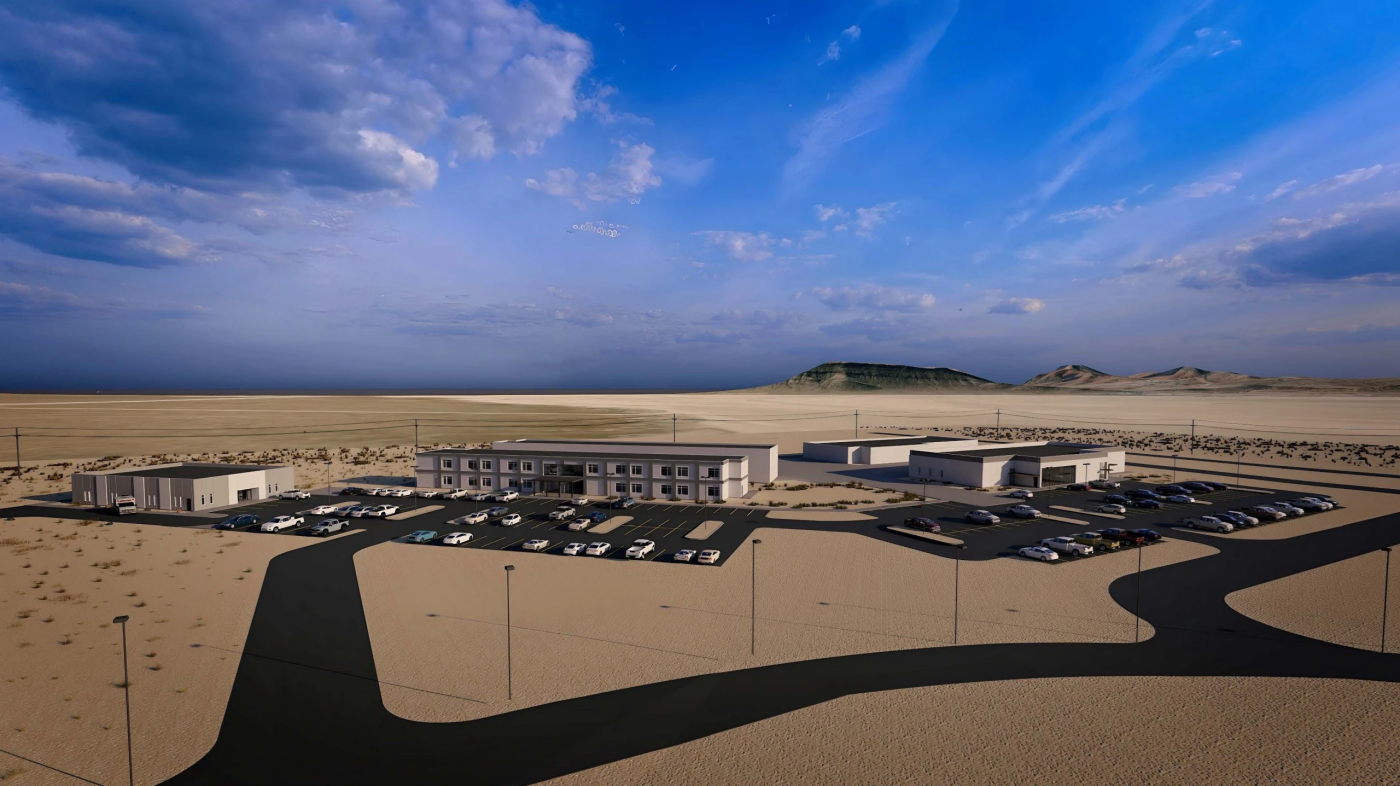
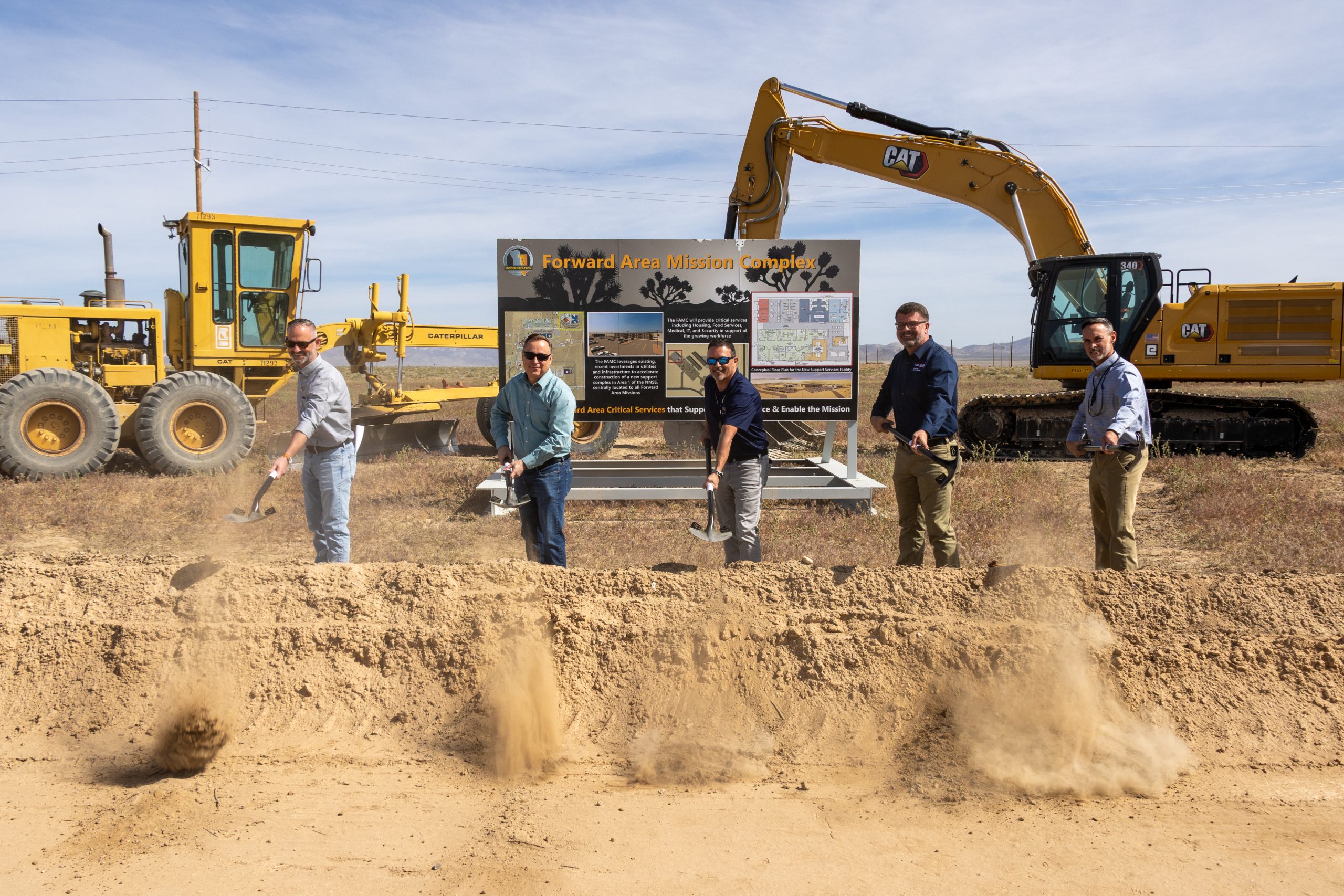
Faster emergency response times, centralized service facilities, collaborative workspaces and a host of other benefits are coming soon to Nevada National Security Site as part of the new Forward Area Mission Complex (FAMC). Strategically located in Area 1 near all Forward Area missions and designed to provide critical services to support the Site’s workforce — including housing, food services, medical, IT and security — the FAMC represents a significant step forward in modernizing the NNSS’s infrastructure.
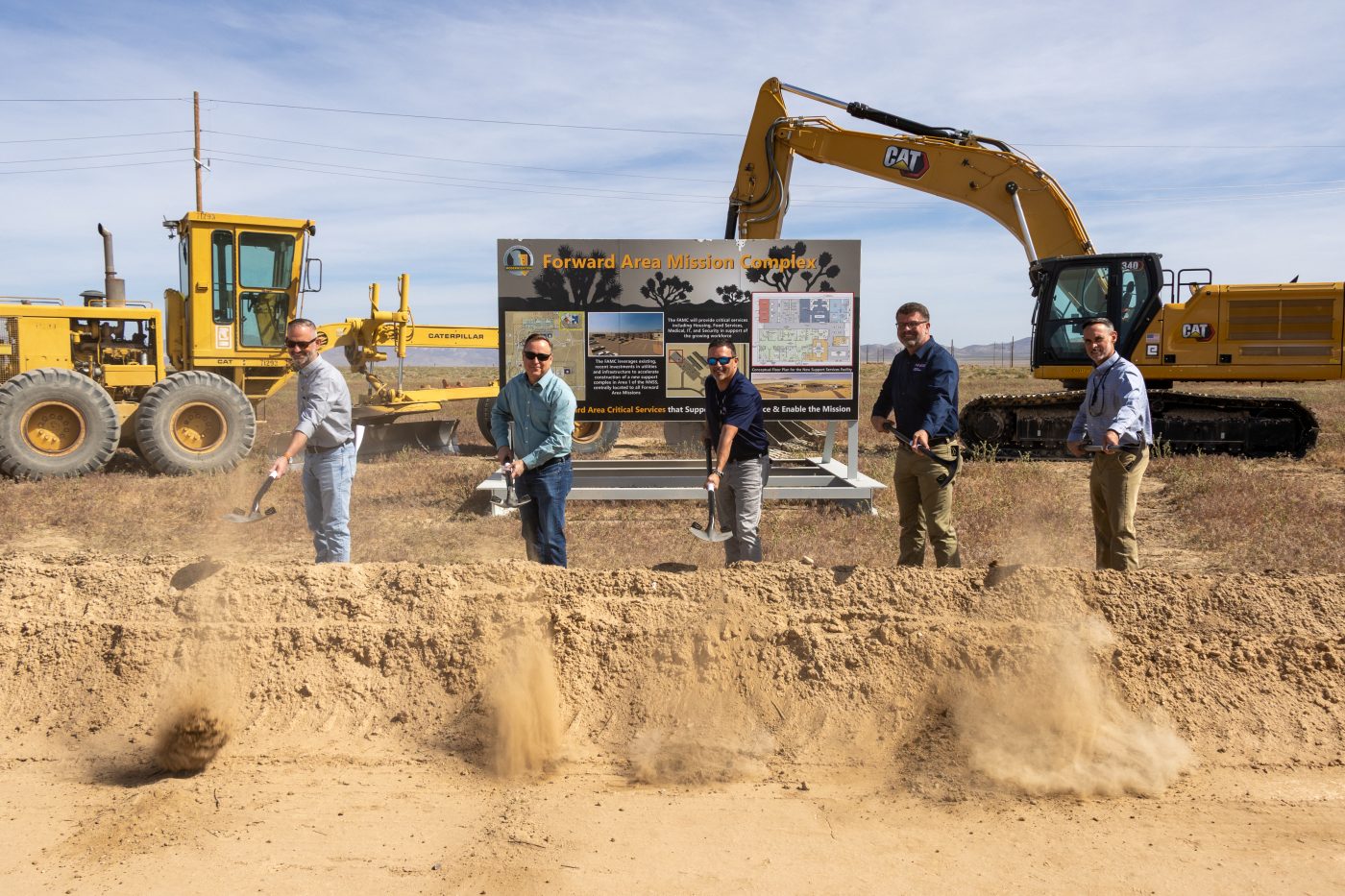
A groundbreaking ceremony held Monday, April 20 celebrated the start of field work on the FAMC, while construction work commenced a week later on April 27.
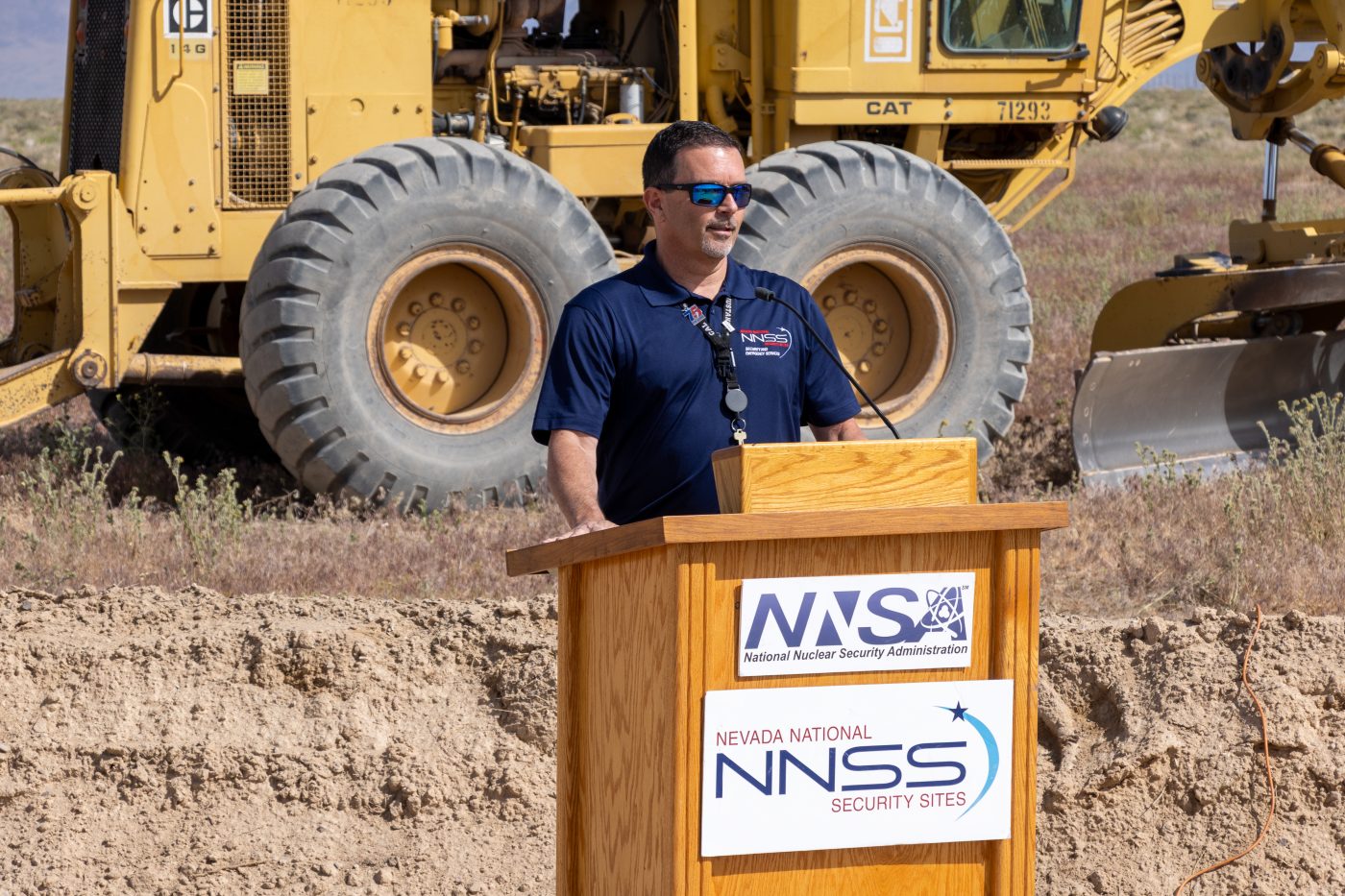
At the groundbreaking, NNSS President Roger Rocha expressed his gratitude for the collaborative effort behind the project. “The FAMC will have a significant and lasting impact on the Site’s future and provide essential services supporting expanding work in the NNSS’s forward area,” Rocha stated. He specifically acknowledged the National Nuclear Security Administration (NNSA) Nevada Field Office (NFO)’s efforts. “I’d like to thank NFO Manager Betty Huck and the many other federal and NNSS personnel who have supported the planning and coordination required to enable the Site to initiate this new worksite modernization project. Without their help, none of this happens.”
Stockpile Experimentation and Operations Senior Director Mike Autry highlighted the project’s strategic benefits. “The FAMC is an exciting project,” Autry said. “It’s designed from the ground up to increase efficiency, create synergies for the assembled working groups, and even reduce travel times.”
The impact on emergency response times was a key theme emphasized by Senior Director of Mission Assurance Stacey Alderson. “Occupational Medicine, Industrial Hygiene, and most of our first responders are all set up in Mercury,” Alderson explained. “That’s a 20-minute lead time for them just to get here in an emergency. Having services housed out here at FAMC in addition to those at Mercury will make a huge impact on our response times.”
Security and Emergency Services Senior Director Anthony Mendez stressed the future-forward planning that went into the facility. “The Site is huge, as everyone knows. Having the protective force, badging operations and other key services out here is vital,” Mendez said. “Our mission is growing, the site is growing, and with the FAMC, security and emergency services are poised to grow with it.”
“The vision and planning to enable this project have been underway for nearly a decade,” said Infrastructure Senior Director Dave Giesler. “The 138 KV upgrades, the underground power grid, utility infrastructure upgrades and everything else combines to make work on this swift and sure. Prior investments make this project a ‘plug and play’ design.” Giesler anticipates significant progress, with the first support building expected to be operational by the first quarter of 2027.
For more information, watch this clip: